
Welcome to Musings—
A space where I cut through the noise and get to the heart of effective leadership and strategy execution. Here, I share hard-earned insights, practical frameworks, and candid reflections to help you navigate the complexities of leading teams and driving change. Each post is designed to be a quick, impactful read—something you can digest between meetings and apply immediately. Whether you're refining your leadership approach, tackling execution challenges, or seeking to foster a more cohesive team, you'll find valuable takeaways here.
Dive in, reflect, and let's grow together.
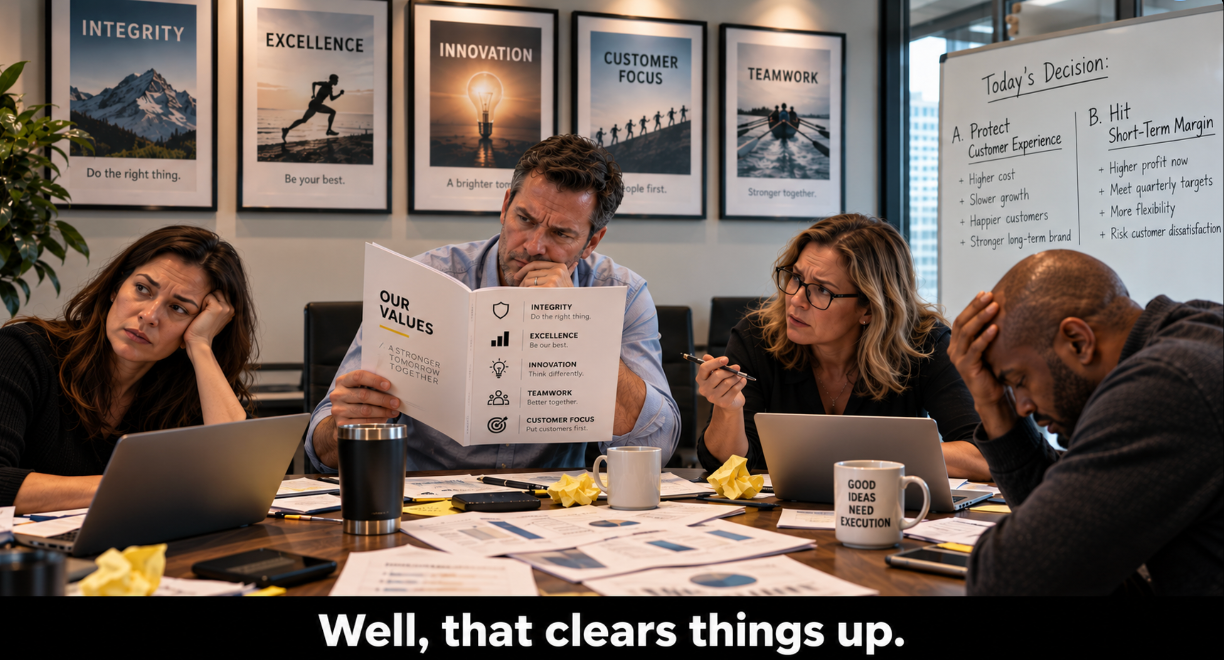
Your Company Values Should Actually Do Something
Company values may be one of the biggest wasted opportunities I’ve seen in business.
Almost every company has them. And all too often, they’re bland platitudes that don’t tell anybody much of anything. That’s a shame, because values can be an incredibly powerful tool for execution.

The Expert Trap: When Success Makes You Stop Asking Questions
The more success you've had, the more evidence you have that your judgment is good. Experience becomes expertise. Expertise becomes confidence. And eventually, that confidence can make contradictory information easier to dismiss.

Something’s Not Adding Up
Metrics are the language of business, and when the metrics aren't clear, it's hard to plan or execute effectively. Teams have to know what they're working on and how it connects to what the organization cares about most. When those connections aren't clear, every function can feel successful in its own lane without the company actually succeeding.

Alignment is Overrated
I think alignment is overrated.
We talk a lot about “getting aligned” in the business world.
But when we're talking about the future, like we are with strategy, it's almost impossible for everybody to completely agree on the future at a detailed level. The future is unknown. If we're being honest with ourselves, we can't be 100% sure.
So 100% alignment is a silly goal that's just going to set us up for failure.
What we really need is commitment. We need to get past asking, "Will this work?" and get started on asking, "How are we going to make this work?"

Best Buy’s Strategy Failed. Now Tell Me Why.
Let's play a game. Imagine Best Buy's just announced new strategy turns out to be an unmitigated disaster.
That's a premortem. You assume the strategy has already failed, pick a date, and work backward to figure out why. Companies regularly run postmortems after the fact, but it's a lot cheaper to find the flaw using the same mindset in advance than finding it eighteen months later after millions of dollars have been invested.

What You Meant Isn't Always What You Said
We're often not as clear as we think we are.
What's clear in our head, shaped by our own background, biases, and experience, doesn't always translate into the words we actually use with our team.
The good news is you can get better at this, and AI is actually a pretty useful partner to practice with.
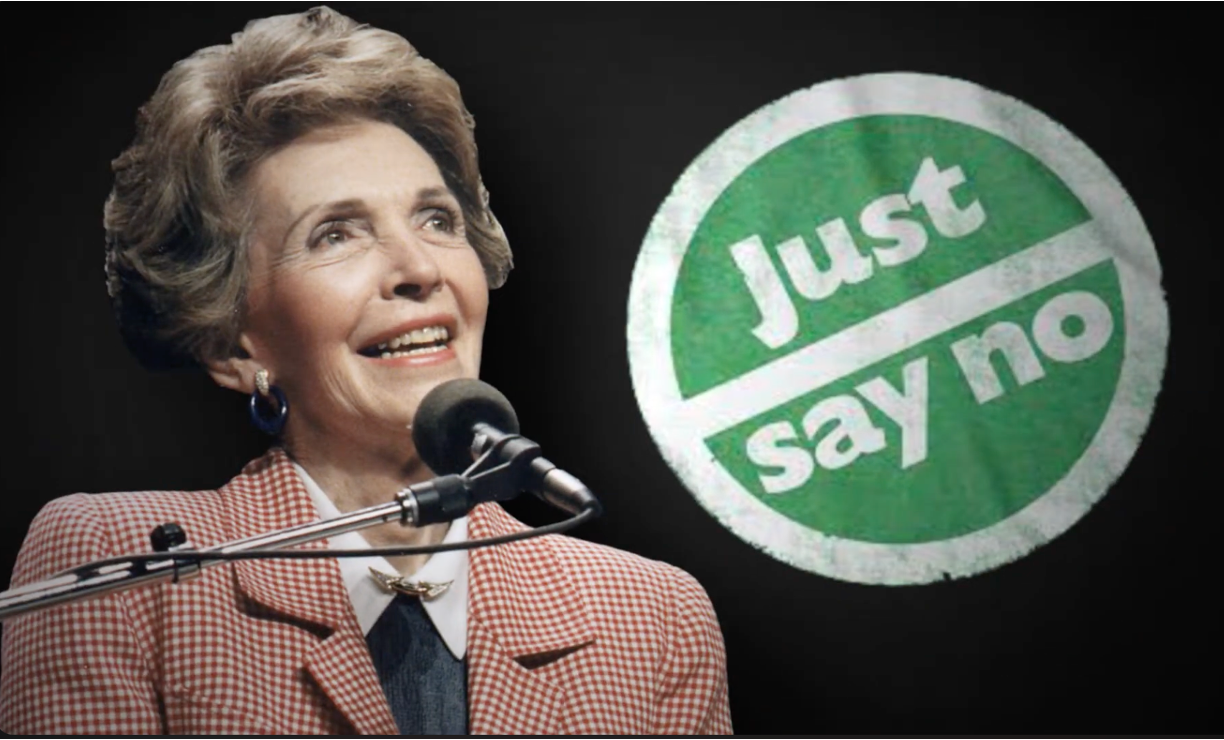
Just Say No
Saying no is hard. It feels like a loss, and we hate losing. There's even a psychological term for it called loss aversion.
So we say yes, especially because in isolation, so many ideas sound great. But every yes steals time, budget, and attention from something else. You may not feel that trade right away. But you may feel it acutely months later when the thing you cared about most is still sitting there untouched because everything else ate first.
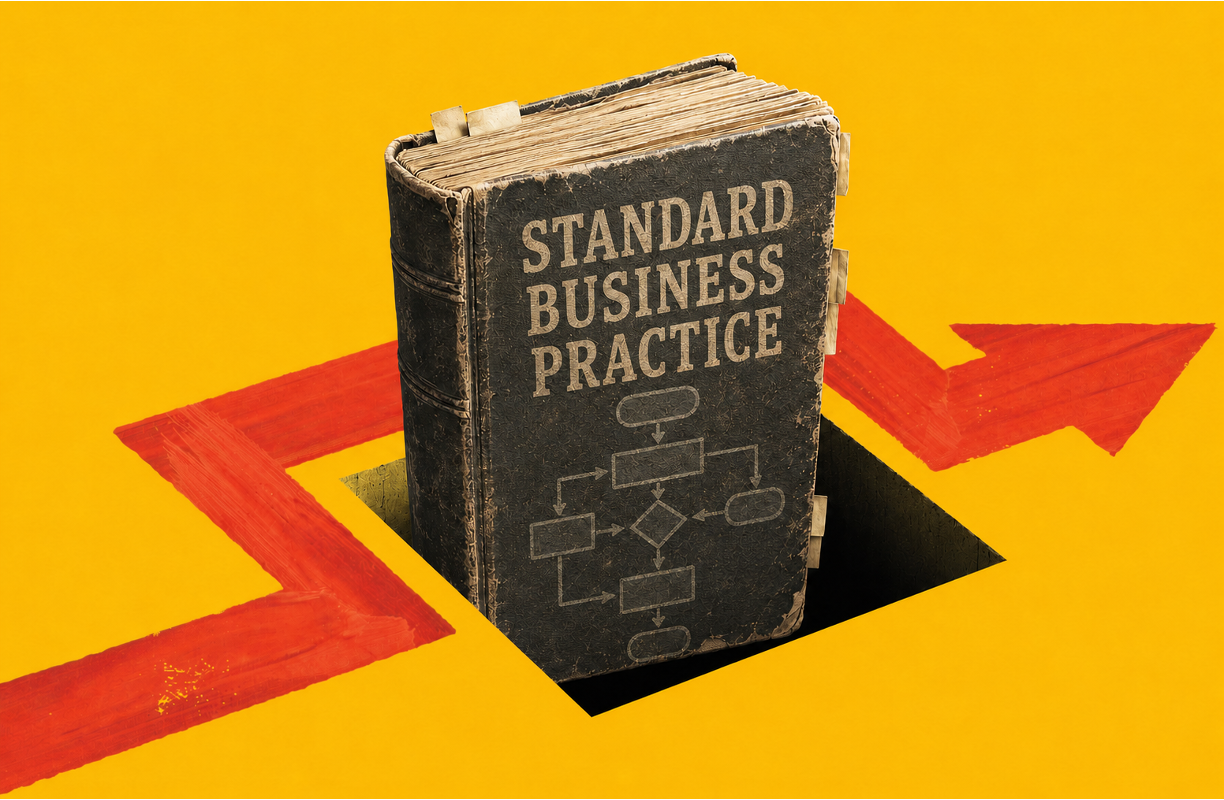
The Conventional Business Wisdom Trap
There's an old saying that doing the same thing over and over and expecting a different result is the definition of insanity.
Research by Kaplan and Norton found that 90 percent of organizations fail to execute their strategies successfully. Harvard Business Review reports that 67 percent of well-formulated strategies fail due to poor execution. Most leaders have lived those numbers. And yet the approach to execution rarely changes.

The Ivory Tower Trap
The strategy is set. The kickoff went really well. But a few months later, the leader has moved on to the next thing, and the team is left navigating execution largely on their own.
A leader's job doesn't end when the strategy is handed off. It shifts. The planning phase requires strategic thinking. The execution phase requires coaching, which is the active, ongoing work of keeping teams focused, motivated, and moving forward as reality unfolds.

The Silo Trap
Every team has a plan. Everyone knows their deliverables. Yet still, three months into execution, important things are falling through the cracks, and it's genuinely unclear whose responsibility it is.
The structural reason is usually the same. Org charts are built around functions—marketing, operations, finance, product, sales. That structure creates clarity within each function. But what it doesn't create is clarity about how those functions work together when a strategy requires all of them moving in the same direction at the same time. And almost every meaningful strategy does.

The Signal Fade Trap
The strategy launch went extremely well. The leadership team spent weeks refining the message, building the deck, and rehearsing the delivery. People applauded at the all-hands meeting, and there were good, thoughtful, and engaged questions. You walked out feeling the organization was primed and ready to go.
Then the day-to-day took over.
Two months later, you looked up and realized not much had changed.

The Overcommitment Trap
"We're just going to have to build the plane while we're flying it."
If you've said that—or heard it said—with a straight face, you've probably been in the Overcommitment Trap. The phrase gets treated as a rallying cry, or more concerning, as a badge of honor. But think about what it actually means. Nobody on a real plane would find that reassuring. Neither does your team.
The Overcommitment Trap is what happens when a leadership team keeps adding new priorities without taking anything off the plate.

The Complexity Trap
The villain is the assumption. Specifically, the assumption that because those in the room understood it, the organization would, too.
But the leadership team developed that understanding through extensive debates. They absorbed the context and internalized the shorthand. So when someone says "drive customer-centric innovation across our core verticals," they know exactly what it means. But that same phrase hits someone two levels down with no shared context, no backstory, and a to-do list already full of urgent work, and it means almost nothing. Or worse, it means something different to everyone who hears it.

The Isolation Trap
Your leadership team spent weeks on the strategy. You debated, pushed back on each other, and stress-tested the logic. By the end, you were aligned. The deck was sharp, and you felt really good about it.
Then you rolled it out and it just didn’t go the way you expected.

When You're Too Excited to See the Risk
The more something seems to benefit you, the less risky it seems overall. Your brain doesn't evaluate benefit and risk as separate questions, it bundles them together. So when you're genuinely excited about an idea, the risks get diminished in your brain. The reverse is also true. When you're skeptical of something, the benefits get harder to see.
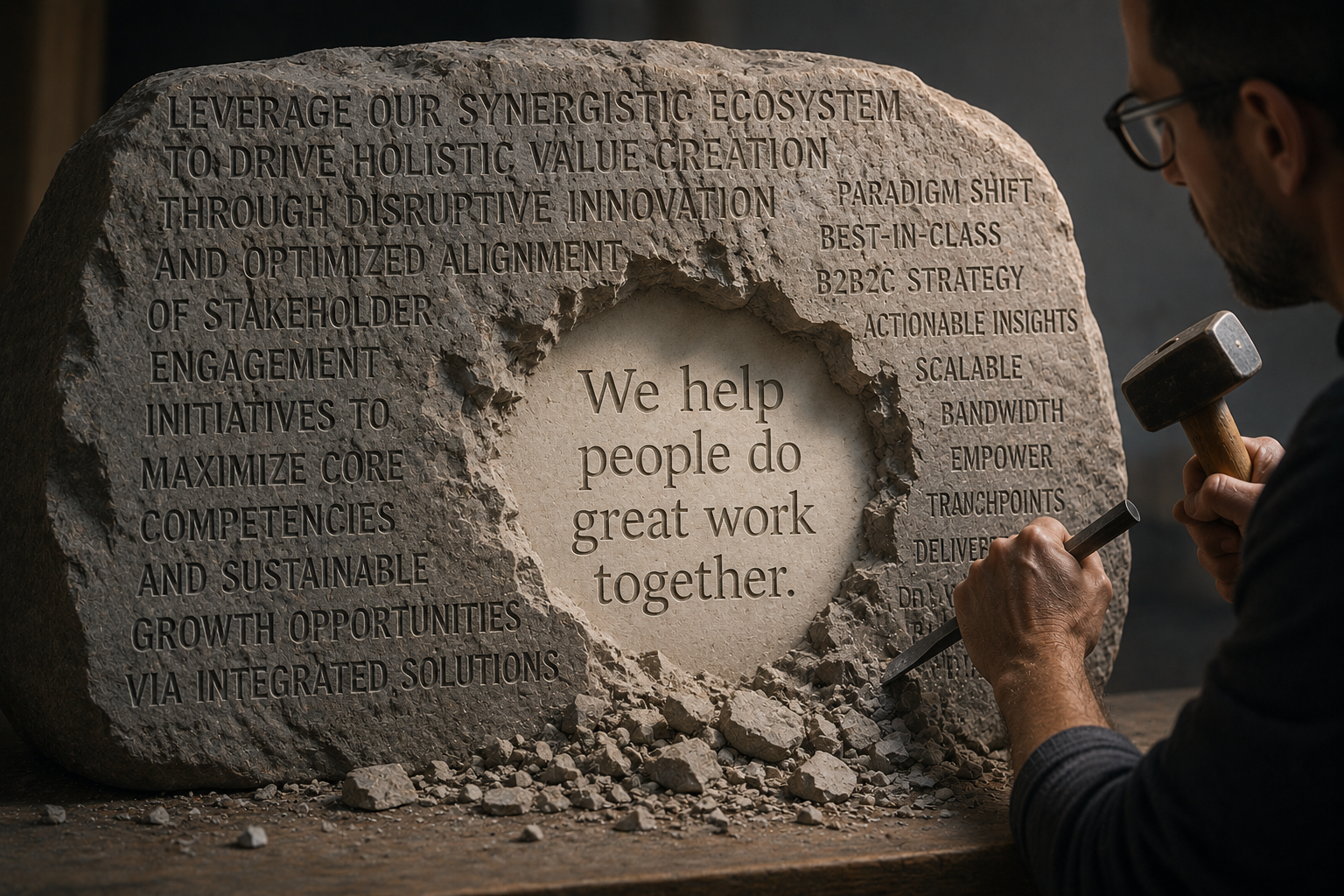
Strip It Down
All too often, strategies are filled with complicated business jargon that doesn't translate well to the general population of a business. I don't think people do that just to sound smart. I think they actually believe they're being more precise. Words like "leverage," "ecosystem," "holistic," and "stakeholder value" feel specific to the person who wrote them. The problem is the curse of knowledge—once you know what you mean, it's almost impossible to hear how it sounds to everyone else.

You Have Three Incentive Tools. Are You Using All of Them?
Incentives can make or break your execution. Get them right and people bring their best. Get them wrong and a solid strategy can peter out quickly. All too often, leaders reach for the same lever every time—and miss the other two entirely.

The Battle of “Want” vs. “Should”
Want never goes away.
The people who actually follow through aren't more disciplined than the rest of us. They just planned for the moment when want would tempt them away from should. Everyone else assumed future-them would handle it. Future-them rarely does.
Every strategy is a essentially a list of shoulds. We should enter this new market. We should fix our customer experience. We should build this capability. And when the plan gets built, it looks completely achievable.

Don’t Waste the Downtime
Every initiative has real constraints. Some work genuinely can't begin until something else happens first. But teams routinely treat optional sequencing like a hard requirement, and the cost isn't just the delay. It's everything that could have been happening while everyone was waiting.

The Case for Doing Nothing
I'm writing this from New Orleans JazzFest. One of my favorite places on earth.
Yesterday, between sets, I just sat. No phone. No podcast. No plan. Just the hum of the crowd thinning out and the distant sound of someone's soundcheck bleeding across the fairgrounds. And somewhere in that quiet, my brain did something it rarely gets to do anymore: it wandered.
Thoughts I hadn't made time for started surfacing. Nothing particularly urgent—just loose, unfinished ideas I'd been carrying around without realizing it. It felt like the mental equivalent of a good stretch.