
A Fair and Square Disaster: All-Time Strategy Trap Fail #2
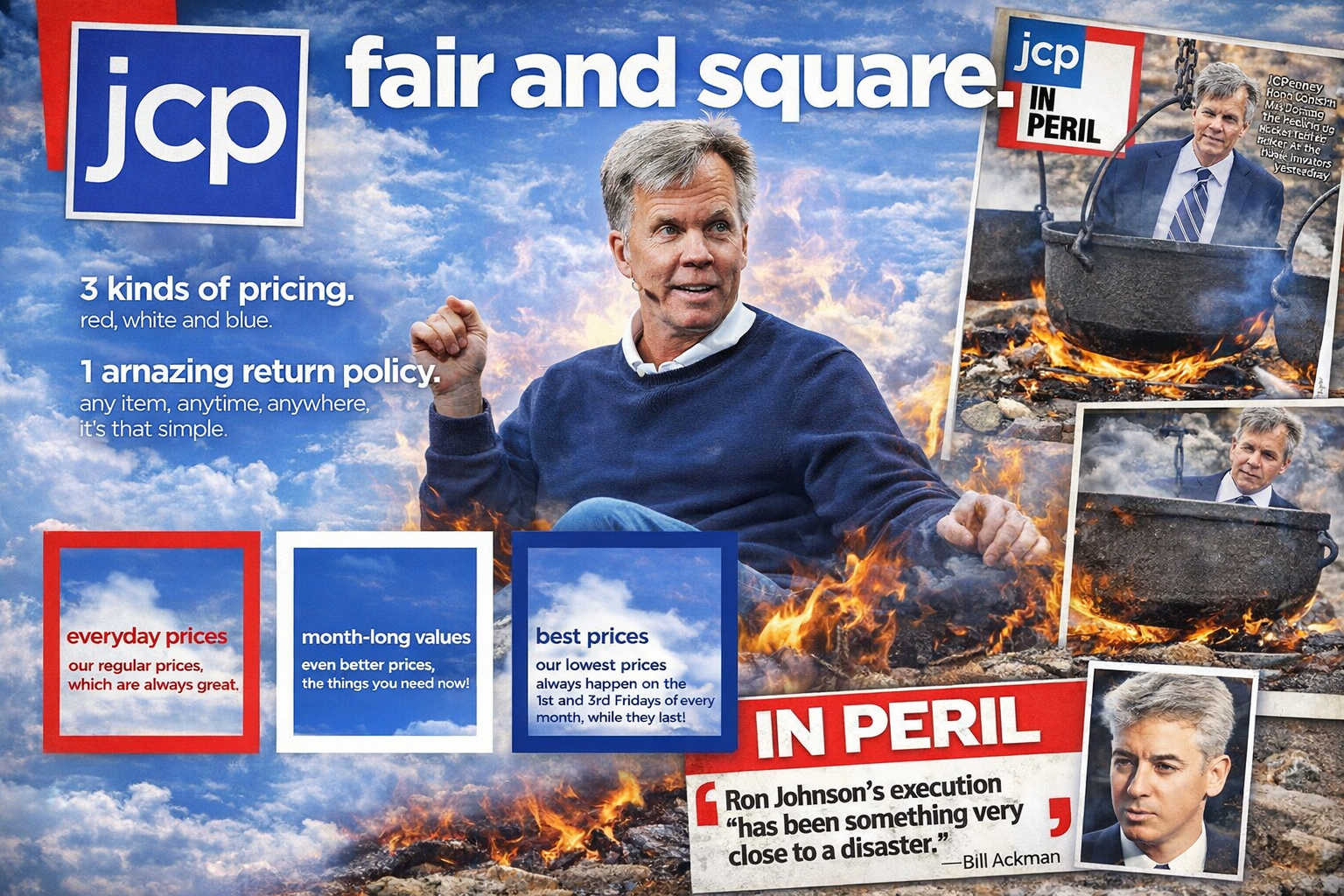
In 2011, JCPenney brought in Ron Johnson, the retail star who had built Apple’s iconic stores. His mission was bold: stop playing the endless coupon game and replace it with “Fair and Square” everyday low pricing.
It was simple. It was elegant. It was revolutionary.
And it was a catastrophe.
In February 2012, Johnson launched the strategy nationwide—all at once. No test markets. No pilots. Within 17 months, sales had fallen 25%. The stock price dropped 55%. Johnson was fired, and the company had burned through billions in value.
The Vision Made Sense Johnson saw what everyone else saw: JCPenney was trapped in an exhausting cycle of fake markups and deep discounts. Nothing sold at full price. His answer was to bring the Apple Store philosophy—clean stores, consistent pricing, no gimmicks—to middle America.
The Trap: The "I Did Not Realize" Moment The rollout was chaos. Store employees, who had spent years explaining coupon rules, now had to defend a pricing philosophy they barely understood. Customers walked into stores, looked for the sale signs they were used to, didn't see them, and walked out.
The COO, Michael Kramer, later admitted the truth in one devastating sentence: “We did not realize how deep some of the customers were into [coupons]”.
The senior team of executives from premium retailers failed to ask the store managers who actually knew the customer.
The Way Out: In my book, The Strategy Trap, I introduce a system called the Six Cs.
They’re the conditions teams need to actually execute their ideas.
JCPenney’s strategy might not have failed if these conditions were in place.
Two of them mattered most.
Co-creation: If Johnson had Co-created the rollout with store managers, they would have told him the truth: JCPenney shoppers don't view coupons as a hassle; they view them as a game they want to win. A pilot program would have revealed this psychological attachment before they risked the whole company.
Clarity: Applying Clarity would have required leadership to give employees a clear story to tell. When customers asked "Where are the coupons?", associates didn't know what to say. If you can't explain why a change is good, the customer defaults to silence—and leaves.
The Lesson: Great strategy requires a great story. Ask yourself: Does my frontline team know how to explain "Why we are doing this" to the customer in words the customer understands?
Master the Six Cs These stories are just the warning signs. The solution is the system. You can learn exactly how to apply Co-creation, Capacity, Clarity, Communication, Coordination, and Coaching in my upcoming book, The Strategy Trap.
[Pre-order from your favorite bookseller at TheStrategyTrap.com]
Next Week: Failure #1. The Grand Finale. The sun never sets... until it does.
