
The Fastest $2 Billion Failure in Entertainment History: All-Time Strategy Trap Fail #6
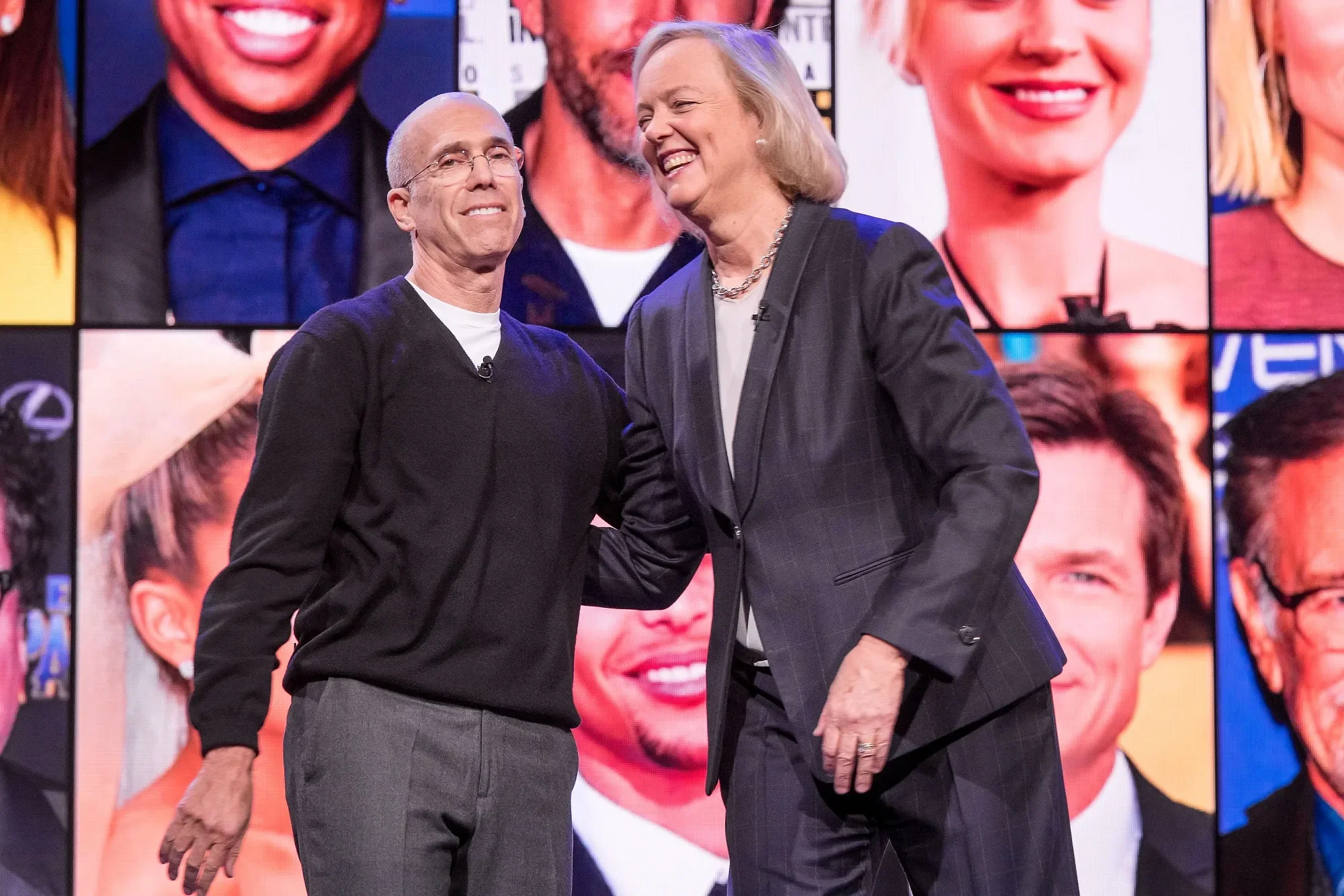
It launched with nearly $2 billion in funding. It was backed by some of the most powerful names in Hollywood and Silicon Valley.
And there’s a good chance you barely remember it.
That’s the first clue.
In just six months, the company burned through its capital and shut down, becoming the fastest $2 billion failure in entertainment history.
This is the story of Quibi.
The Vision Made Sense
Short-form video was exploding. TikTok had proven that people wanted bite-sized content on their phones.
Quibi, led by Jeffrey Katzenberg—former Dreamworks CEO and one of Hollywood’s most influential producers—and Meg Whitman, the former CEO of eBay and Hewlett-Packard, set out to create “premium mobile TV”—Hollywood-quality shows delivered in ten-minute episodes, designed for moments in between.
The idea wasn’t obviously wrong.
The execution was.
The Trap: The Ivory Tower
Quibi was built almost entirely from the top down. Even the name—short for “Quick Bites”—was widely described by younger employees as “cringy.” But they didn’t feel empowered to challenge it.
That pattern carried into the product itself.
The most consequential decision was simple—and fatal: a mobile-only app that didn’t allow users to share clips on social media.
Engineers and social teams warned this would cripple discovery. Leadership pushed forward anyway, convinced that premium content would be enough to drive adoption.
And that’s the Ivory Tower Trap in action: decisions made far from the people closest to the truth.
How the Six Cs Would Have Helped
In my book, The Strategy Trap, I outline a six-part execution system called the Six Cs. It’s designed to surface misalignment early before it becomes irreversible.
Two Cs stand out in Quibi’s failure.
Co-creation
Co-creation means building strategy with the people who know the work best.
Inside Quibi, younger engineers, product managers, and social leads understood how short-form content actually spreads. They knew sharing wasn’t optional. They knew attention—not Hollywood polish—was the real battleground.
Their insights never shaped the plan.
Co-creation brings reality into the room.
Quibi kept reality out.
Clarity
Clarity requires a shared message and a shared definition of success.
At Quibi, that alignment never existed. Some teams believed the mission was premium mobile TV. Others believed the real competition was TikTok and YouTube. Some optimized for subscriber growth. Others for engagement. Leadership focused on prestige.
There was no unified north star.
No consistent definition of “winning.”
Without clarity, execution fractured from day one.
The Lesson
A bold vision—and a massive budget—can’t rescue a strategy built in isolation.
When the people closest to the work aren’t involved, and teams aren’t aligned on what success actually means, even the most promising ideas collapse fast.
Before you launch the next big initiative, ask yourself:
Have we involved the people who know the work best?
And does everyone share the same definition of success?
———————————
Master the Six Cs
These stories are warning signs. The solution is the system.
You can learn exactly how to apply Co-creation, Capacity, Clarity, Communication, Coordination, and Coaching in my upcoming book, The Strategy Trap: Why Companies Fail at Execution and How to Get It Right.
Pre-order at TheStrategyTrap.com.
Next up: Failure #5 — the unicorn that lost its horn.
