
You probably didn’t miss that Jensen Huang resigned as Nvidia’s CEO last week, a few days after admitting to an affair with a woman who was an executive at Megaspeed, a company that buys Nvidia’s chips. And U.S. intelligence officials reportedly suspect she was also a Chinese spy, which made it worse. Huang and Nvidia initially pushed back on reports about the relationship and described it as strictly professional. Then the New York Times reported another affair, this one with an executive who reported directly to him, and a day later he was gone.
There’s a lot of debate about whether he should have stayed. His supporters have argued that he’s a decent man who made a personal mistake, and that losing him is a disaster for the company and the industry. I don’t know him, so I won’t personally judge his character. But I do think there’s a culture and leadership issue here that applies to companies of any size. Once people start wondering whether they can believe their leader, even everyday decisions can become harder to trust.
And a reported relationship with a direct report causes additional concerns. Could other team members trust that promotions, choice work assignments, and access to the leader were being decided fairly? Could they challenge that person without worrying about the consequences? Those questions can affect people who had nothing to do with the relationship.
Huang has said he has about 60 direct reports. With that many leaders reporting to him, questions about his judgment could spread across a large swath of the company. And while supporters may argue that someone is too important to lose, the board also has to consider what keeping him would tell everyone else about the standards they’re expected to follow.
One of my favorite definitions of culture comes from Danny Meyer:
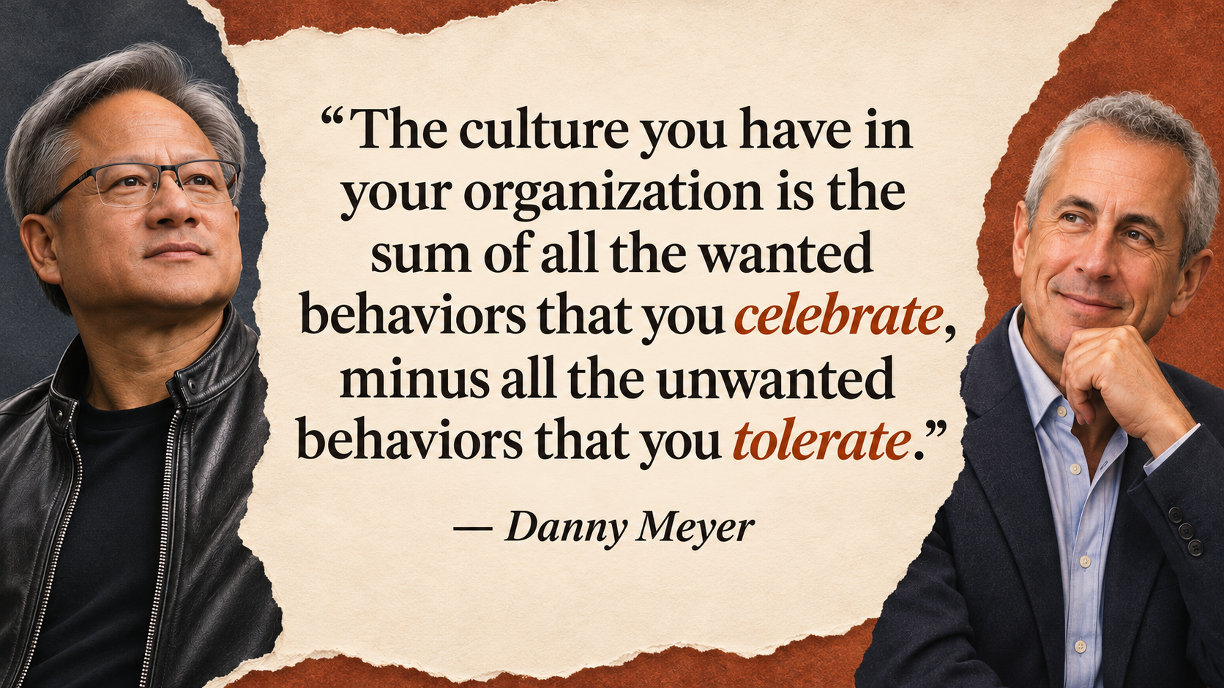
“The culture you have in your organization is the sum of all the wanted behaviors that you celebrate, minus all the unwanted behaviors that you tolerate.”
The “tolerate” part can be uncomfortable. You can talk about integrity all day long, but people will notice if the biggest rainmaker is allowed to bend the rules. They’ll notice if a leader demands accountability from everyone else and makes excuses for himself. Over time, those decisions teach people which standards actually apply…and to whom.
This applies to matters big and small. Leaders also have plenty of everyday opportunities to demonstrate how they expect people to handle uncomfortable truths, including the ones about themselves. Sometimes we need someone else to point those out.
Years ago, a team member told me privately that I was being dismissive in meetings. That was never my intent, but I spent that night researching dismissive behavior so I could understand the feedback and reflect on my actions. I realized I had been doing some of what I was reading about, which was horrifying to me. The next day I apologized to the team, explained what I’d learned, and told them how I planned to change.
I hope that made it easier for people to raise concerns with me. Whether it did would have depended on how I behaved afterward. If I went right back to the same behaviors, my apology wouldn’t have been worth much.
Managing an effective culture is a daily task. We're regularly faced with situations that require us to make decisions about what we will or won’t tolerate. Imagine a scenario where someone on your team hides bad results, takes credit for a colleague’s work, or agrees to a decision in a meeting and then works against it afterward. You know you should address it, but you like the person and they get good results. You may tell yourself it wasn’t that big a deal, or it was probably a one-time thing. So you let it go. But their colleagues still have to deal with those behaviors, and they notice when the standards aren’t applied consistently.
Part of what makes this hard is that it is a form of conflict, and plenty of us resist conflict. It’s natural to want to be liked, and you probably don’t want to be the bad guy with someone you like. I have absolutely had that inner turmoil. But avoiding the conversation leaves that person without information they need, and their colleagues end up paying the cost. (I’ve also been on the colleague side and know how it feels. Maybe you have, too). Telling someone clearly what needs to change, and helping them change it, is actually one of the kinder things a leader can do. It gives them a fair shot at fixing the problem before it hurts their reputation, and it shows everyone else you’ll do the same for them.
Not all cases are equal, of course. Different problems deserve different consequences. Deliberate deception may cost someone their job, while the right response to an honest mistake might be a dose of coaching. In either case, addressing the behavior means being specific about what needs to stop, explaining what you expect instead, and following up to ensure there’s been a change. If the behavior continues and you keep having the same conversation, you’re still tolerating it.
Your team is watching what you celebrate and what you tolerate. They’re also watching whether you hold yourself to the standards you ask of them.
