
The first time I saw a From/To statement at Nike, I was blown away that two short lists could make it so clear why we needed a new strategy and what it needed to accomplish. They’ve since become one of my go-to tools when I help clients work through their strategy.
The setup is about as simple as it gets. The “from” list describes the current state of the business, including what needs to change. The “to” list describes what the business will look like and how it will act once the strategy is working.
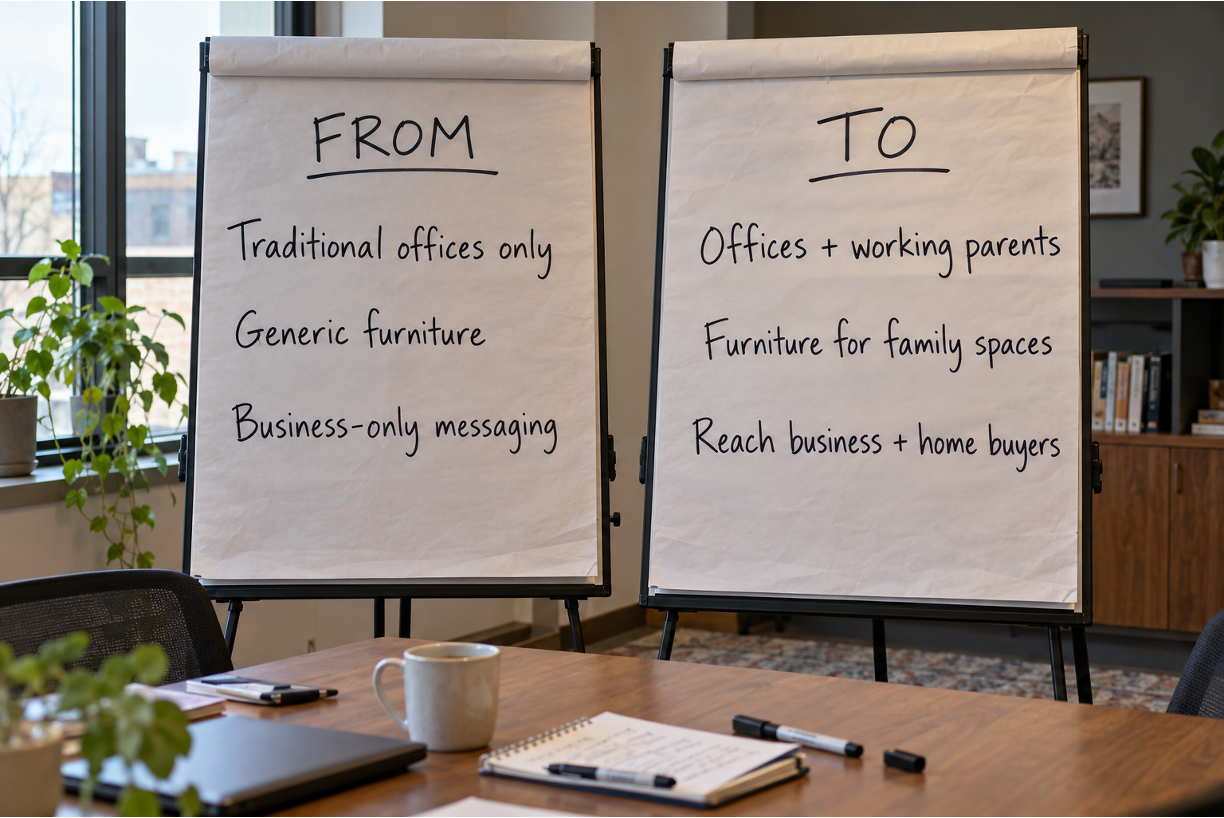
Here’s the example I used in The Strategy Trap, for OfficeAce, a fictional office furniture company expanding to serve parents who work from home.
From:
Sole focus on traditional offices.
Generic furniture designs.
B2B-only messaging.
Function over user experience.
Declining legacy revenue.
To:
Serving both traditional offices and remote-working parents.
Family-friendly, innovative designs.
B2B2C messaging strategies.
Style, function, and flexibility.
Diversified, sustainable growth.
The “from” list helps explain why the new strategy is necessary. Maybe something is going wrong, or maybe there’s an opportunity the business isn’t currently equipped to pursue. Either way, people need to understand why change makes sense. The “from” list should be honest and written in plain, neutral language that describes what’s happening without pointing the finger at anyone.
The “to” list gives people a picture of where you’re headed.
The strategy is the map that gets you from one list to the other. You still have to make choices about where to invest, how to compete, and what to stop doing, but you have clarity on where those choices are intended to take you.
Developing the From/To early in the strategy process is really valuable. When the people co-creating the strategy develop both lists together, they have to get specific about today’s reality and the future they want. If people have different ideas about where you’re starting or where you’re going, this is a good time to find out.
When it’s time to share the strategy, those same lists help explain the need for change and give people a destination they can picture.
One tip as you build them is that the items don’t necessarily have to match up one for one. I like to read the whole “from” list first, then the whole “to” list, so people can take in each state as a whole. Just make sure the lists are specific enough that people can explain what will change and what that means for their work.
(Shameless plug: Part Two of The Strategy Trap goes deeper on how to build them.)
If you’re in the middle of 2027 planning right now, try writing both lists with your team. See where you agree and where you have more work to do.
