
Stop Hiring the Hero
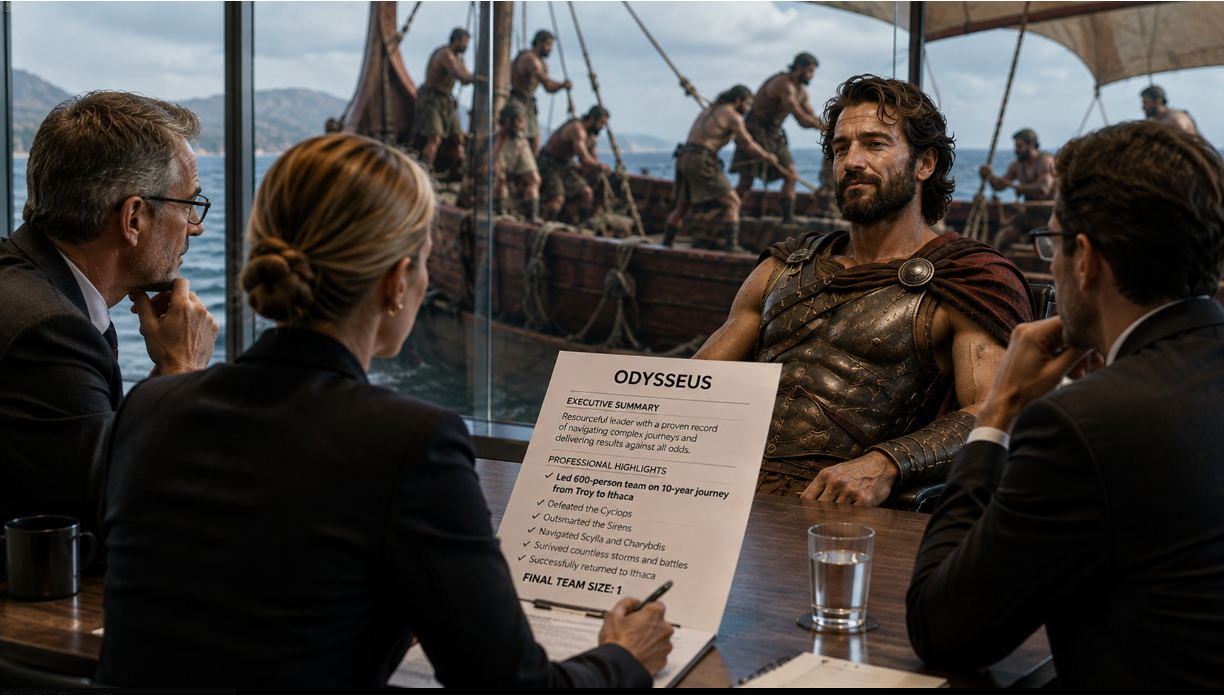
Your success probably depends on a fair amount of selfless collaboration. But does your hiring process reward the hero’s journey?
Somewhere on your team may be someone who absolutely nailed the interview. They had a great resume, crisp answers, and references that checked out on every question you asked.
A year or two later, that same person may be one of the reasons execution gets stuck. They jump in to solve problems rather than helping someone else solve them. They hold onto the visible part of a project instead of handing it off. A fix that started as someone else’s idea somehow comes out sounding like theirs. They may be very good at what they do. They just have a hard time succeeding without being at the center of the success.
And there’s a decent chance your hiring process helped select for exactly that.
When employers are asked what separates a successful hire from a mis-hire, the answer rightly goes well beyond technical skills. TestGorilla’s 2025 State of Skills-Based Hiring report found that employers rank having the right skills (60%) and the right experience (56%) at the top, but potential to grow (54%) and alignment with company values and culture (49%) come in close behind.
Leaders already know character and fit matter nearly as much as capability. But that knowledge doesn’t necessarily show up in how hiring actually operates. The same report found that 78% of employers have hired someone with strong technical skills who then struggled in the role because of poor soft skills or a bad cultural fit.
A Leadership IQ study of more than 20,000 new hires found that 46% failed within 18 months. Only 11% of those failures came down to a lack of technical competence. Most were related to things like coachability, emotional intelligence, temperament, and motivation.
Individual accomplishment absolutely matters. But when the work depends on collaboration, it’s only half the hiring equation.
We train people to tell the hero’s story
Think about the basic structure of a resume.
It’s built almost entirely around highlighting what you personally did.
Candidates learn early which stories get the job. I increased revenue by 20%. I launched a new product. I led a transformation. I fixed a broken operation. They get coached to quantify their individual contribution and build their answers around being the protagonist.
And then there are the applicant tracking systems (ATS).
Candidates know their resume may be screened or searched through an ATS before a human ever seriously considers it. So they logically tailor their resumes to the job description, using the skills, experience, titles, and keywords the company says it wants.
Think about what that means. If your job description is dominated by technical requirements and individual accomplishments, you’re effectively telling candidates how to optimize their resumes to get into your funnel. Then your screening process looks for those same signals.
TestGorilla found that employers themselves see resume screening as part of the problem. Forty-five percent identified filtering by resume as one of the difficult parts of hiring, and the report argues that relying on resumes can cause employers to overlook candidates who don’t have the “typecast resume” they expect.
So getting the job requirements right affects who gets the chance to interview in the first place.
If you write the job description for the hero, don’t be surprised when the hiring funnel gives you heroes.
Then they get to the interview and we reinforce it.
Tell me about a time you solved a difficult problem.
Tell me about a time you demonstrated leadership.
Tell me about your biggest accomplishment.
There’s nothing wrong with wanting to know what someone actually contributed. You should. The problem comes when we focus mostly on detailed evidence of individual accomplishments and much less on what happens when that individual has to give something up for the team to succeed.
Can they make someone else’s idea better without needing to own it?
Will they flag a problem early when someone else will ultimately get credit for fixing it?
Can they hand off the visible part of a project and help the next person succeed?
Will they spend an hour coaching someone through a problem they could solve themselves in ten minutes?
Those behaviors don’t produce nearly as clean a hero story. But they matter enormously once someone is inside your organization.
Execution is a team sport
Execution depends on people working across functions, sharing information, making handoffs, challenging each other, changing their minds, and sometimes subordinating their own priorities to something bigger.
Three of the Six Cs from The Strategy Trap make the pattern particularly easy to see.
Co-Creation. Building a plan together requires sharing ownership of it. Can someone improve an idea they didn’t originate and genuinely support the result?
Coordination. Execution depends on handoffs. Can someone give work, information, authority, and sometimes credit to somebody downstream without needing to remain at the center?
Coaching. Developing someone else takes time. Can someone invest in making another person better even when doing the work themselves would be faster?
These are exactly the kinds of behaviors that make execution work. If your strategy is eventually going to require them, you should be looking for them before someone joins the company.
Start well before the interview
The fix starts well before anyone sits down with a candidate.
Analyze what your team actually needs before you write the role.
This is the step that’s easy to skip when there’s pressure to fill a req fast. Getting meaningful cohesion and collaboration takes understanding your current team dynamics first.
Ask the team directly. Where does collaboration break down? Which handoffs go smoothly and which don’t? What is the team already strong at? Where could it use help?
I wrote more about how I break that down in The Three Cs of Hiring.
Then put what you learn into the role requirements themselves.
Ask what this role requires someone to give up, hand off, or share for the team to deliver. Those behaviors belong in the requirements with the same weight as the technical list, rather than getting buried in an afterthought about being a “team player.”
Then align the interview panel before anyone talks to a candidate. Don’t leave these attributes up to whatever each interviewer happens to notice or value. Decide which behaviors you’re screening for, how much technical and behavioral attributes should weigh in the decision, and which interviewer is responsible for gathering evidence of each.
Ask questions where the hero isn’t guaranteed to win
In the interview, ask questions that make honesty easier.
“Tell me about a time you led a team” gives a candidate a pretty easy setup for the hero’s version.
Try something messier.
Tell me about a time a teammate’s idea got chosen over yours. What did you do next?
Tell me about something important your team accomplished where someone else deserved more credit than you did. What did they do? What did you do?
Tell me about a project where your success depended heavily on someone else. What did they contribute?
Tell me about a time a plan you didn’t own started falling behind. What did you do?
Then follow up.
Who else was involved? What did they actually do? Who deserves the most credit for the outcome? What would those people say you contributed?
You’re listening for whether the candidate can tell a story in which someone else gets to be important.
Reference checks can help here, too. Ask a former manager or colleague:
Who got better because this person was on the team?
What did they contribute to something important when they weren’t the leader?
What happened when they strongly disagreed with a decision and the team decided to go another way?
Those answers can tell you a lot about how someone will actually operate once the interview performance is over.
Measure whether any of this works
Look at how much weight your process—from writing the job post all the way through interviews and reference checks—puts on technical capability versus the behaviors required to work effectively with other people.
Then track what happens over the next six to eighteen months in terms of performance, retention, conduct issues, and feedback from peers.
You may discover that some of the things you’ve historically weighted heavily in hiring aren’t particularly good predictors of success.
You may also discover that the people who make execution easier aren’t always the people with the clearest individual success stories. They’re often the people helping teammates succeed, making handoffs work, raising problems before they become crises, and doing important work that nobody is likely to put on a resume.
I realize the hiring process can already feel tedious, and I’m suggesting putting even more work into it.
But think about the alternative.
You can spend another hour figuring out how someone works with a team before you hire them, or spend the next two years discovering the answer.
Your strategy is eventually going to depend on people giving up ownership, sharing credit, making clean handoffs, raising problems early, and helping other people succeed.
You might as well start hiring for it.
